Best Glue for Paper Crafts: Which Adhesive to Use When
Glue stick, PVA, tacky glue, tape or foam squares? Each suits a different job. Here is how to choose, and how to apply glue so paper stays flat.
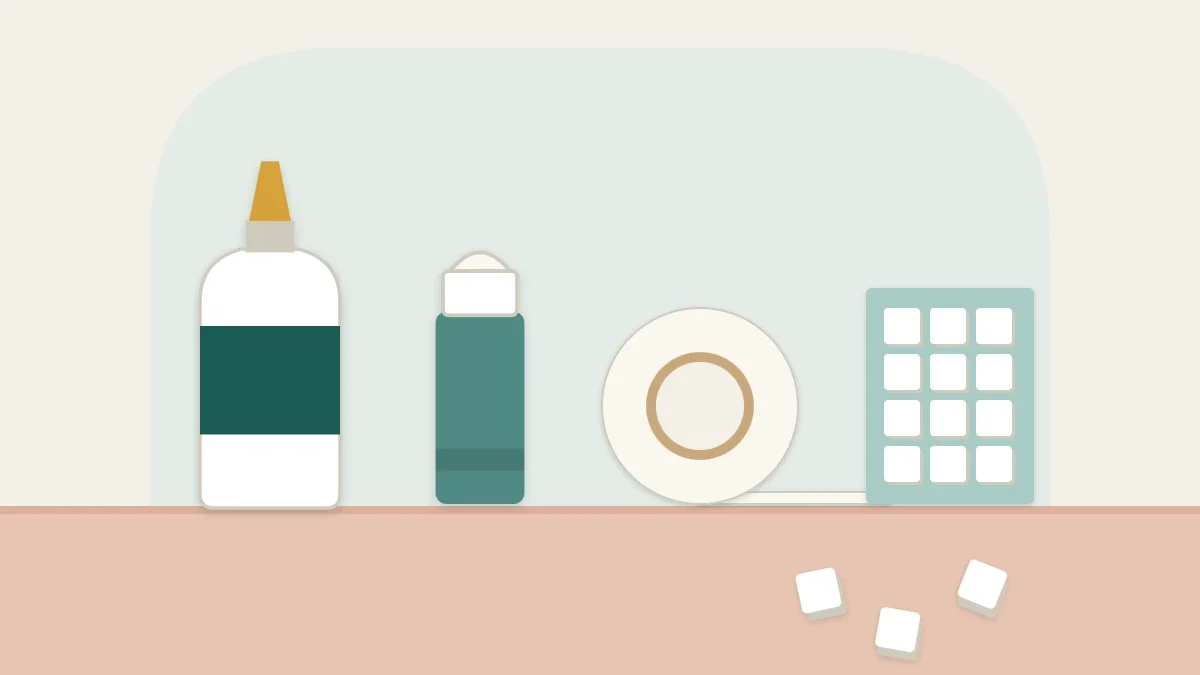
There is no single best glue for paper crafts, and the search for one is why so many projects end up warped, shiny or falling apart. Paper absorbs water, and most adhesives contain it. The right choice depends on how much moisture the paper can tolerate, how large the glued area is, whether the join is flat or three-dimensional, and how long you need to reposition a piece before it sets. Four or five adhesives cover nearly everything.
Quick reference
| Job | Adhesive to reach for |
|---|---|
| Flat layers of paper on paper | Glue stick |
| Large panels that must stay perfectly flat | Double-sided tape or adhesive sheet |
| Box tabs, 3D shapes, structural seams | PVA or tacky glue, or strong double-sided tape |
| Tiny pieces, quilled coils, fine details | PVA from a fine-tip applicator |
| Raised layers and shadow effects | Foam squares or foam tape |
| Vellum and translucent paper | Small amounts of dry adhesive hidden behind another layer |
| Glossy, metallic or coated card | Strong double-sided tape or tacky glue |
The main adhesives, one by one
Glue stick
A glue stick carries very little water, so it causes the least warping of any wet adhesive. It is the natural choice for flat work: mounting a panel on a card, building up collage, attaching patterned paper to cardstock. Choose one labeled permanent and acid-free. Its weaknesses are a modest bond that may lift on coated surfaces or under tension, and a short working time. Apply it to the smaller piece, right out to the edges, with the piece resting on scrap paper, then position and press immediately.
PVA (white craft glue)
PVA is the liquid white glue that dries clear. It makes a strong, lasting bond and gives a minute or so to adjust a piece, which helps with precise placement. Because it is water-based, it warps paper when used generously. Used sparingly, in thin lines and small dots, it is the best all-round glue for tabs, seams and small parts. Some PVA glues are sold specifically as acid-free or pH-neutral, which is worth choosing for pieces meant to last.
Tacky glue
Tacky glue is a thicker relative of PVA. It grabs faster and contains less water for its volume, so pieces stay where they are put instead of sliding. That makes it useful for three-dimensional work, such as holding a box corner or a curved leaf while it sets. It is too thick to spread smoothly over large flat areas.
Double-sided tape
Tape contains no moisture at all, so it cannot warp paper, and it bonds instantly with no drying time. Narrow rolls, 1/8 to 1/4 in (3–6 mm) wide, suit card layers, box tabs and envelope seams. The trade-off is that there is no second chance: once the surfaces touch, the piece is fixed. Strength also varies a good deal between products, so test an unfamiliar tape on scrap before trusting it with a box seam.
Foam squares and foam tape
These are double-sided adhesive pads with thickness, commonly around 1/16 to 1/8 in (2–3 mm). They lift one layer above another and create a real shadow line between them. Place them near the corners and add one in the middle of any large piece so it does not sag. They are central to dimensional cards and to shadow-box scenes built from layered paper.
Adhesives for occasional use
Spray adhesive gives a thin, even coat over large or intricate pieces, but it must be used with good ventilation, following the manufacturer’s directions, and with the surroundings protected from overspray. Hot glue sets fast and holds bulky items, yet it leaves thick, visible ridges under paper and is rarely the right answer for fine work. Clear household tape and rubber cement are best avoided for anything meant to be kept, since both tend to discolor with age.
How much to use, and where
The instinct is to use more glue for a stronger hold. With paper, the reverse is closer to the truth. A thin film bonds well; a thick layer soaks in, swells the fibers, squeezes out at the edges and takes far longer to dry.
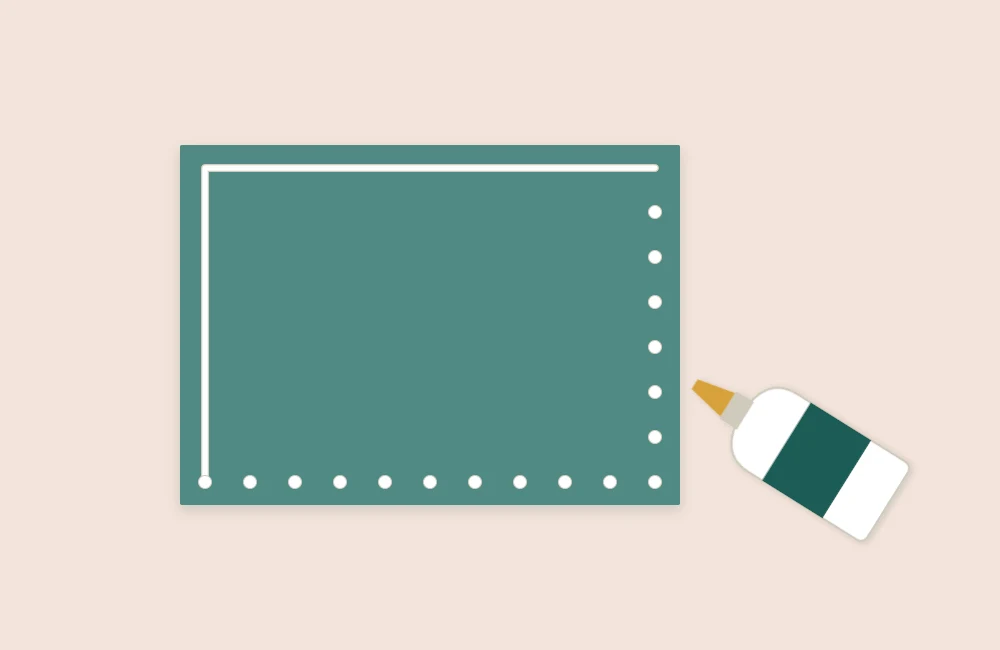
- Apply glue to the smaller piece. It is easier to control, and nothing sticky is left exposed on the background.
- Keep liquid glue back from the edge. Place lines and dots about 1/8 in (3 mm) inside the edge, since pressure will push the glue outward.
- Spread it thin where needed. On a tab or a wider area, even out the glue with a scrap of card or a small flat brush until it is a film rather than a bead.
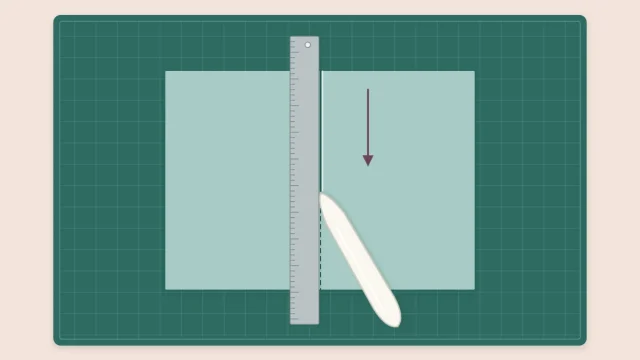
- Position, then press from the center. Smooth outward with clean fingers or a bone folder over a sheet of scrap paper.
- Remove any squeeze-out at once. Lift it away with the corner of a scrap of card instead of wiping, which smears it into a shiny patch.
- Let it dry under weight. Flat pieces go under a heavy book with a clean sheet of paper on each side. Seams on boxes can be held with small clips or simply with fingers for half a minute.
Tip
Squeeze a small puddle of PVA onto a scrap of card or a jar lid and pick it up with a toothpick or fine brush. It gives far more control than squeezing straight from the bottle, especially for small parts.
Why paper warps, and how to prevent it
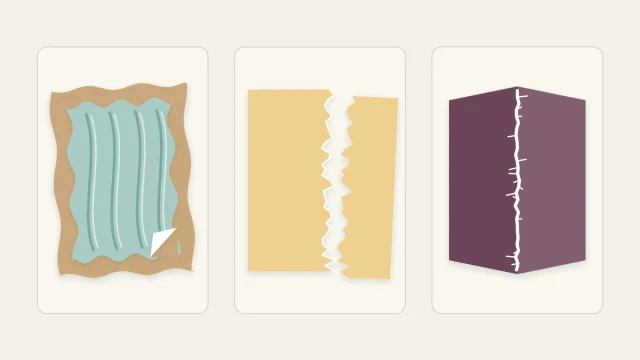
When water enters one face of a sheet, the fibers on that side swell while the other side stays the same size, and the sheet curls. Thin paper and large glued areas show it most. Prevention comes down to four habits: choose the driest adhesive that will do the job, use less of it, glue lighter paper onto heavier paper instead of the reverse, and dry flat work under weight. If a panel still curls, the troubleshooting guide to common mistakes and their fixes explains how to flatten it.
Matching glue to the project
A few examples show how the choices combine in practice. A layered card might use a glue stick for the flat mat layer, foam squares under the focal panel and a dot of PVA for a small embellishment. A gift box needs tacky glue or strong tape on its tabs, because those seams are under constant tension. Collage with torn and cut paper relies on glue stick or thinly brushed PVA, depending on how heavy the papers are. Rolled-strip work, described in the introduction to quilling, depends almost entirely on tiny amounts of PVA applied with a fine tip.
A sensible starting set is therefore short: one glue stick, one small bottle of PVA, one roll of narrow double-sided tape and a sheet of foam squares. Add tacky glue when a project calls for it, and test any new adhesive on an offcut of the actual paper before committing a finished piece to it.
Frequently asked questions
What glue will not warp paper?
Dry adhesives such as double-sided tape and foam squares contain no water and cannot warp paper. Among wet glues, a glue stick causes the least warping. Liquid glue should be applied very thinly and the piece dried under weight.
Is PVA glue the same as white school glue?
Both are PVA-based white glues that dry clear, but formulas differ in thickness, strength and water content. For work you want to keep, look for a craft PVA labeled acid-free or pH-neutral, and test it on scrap first.
Can I use hot glue on paper?
It holds, but it sets in thick ridges that show through paper and add bulk. It is better kept for attaching bulky items than for flat or fine paper work.