Book Page Crafts: What to Make From Damaged Old Books
Worn-out books still hold good paper. How to choose a book you can cut without regret, remove pages cleanly, and turn them into envelopes, bookmarks, garlands and more.
A paperback with a broken spine, a water-stained dictionary, a travel guide twenty years out of date: books like these rarely find another reader, yet their pages are still good paper. Book page crafts treat a block of printed text as a quiet neutral pattern, a soft gray-and-cream texture that sits comfortably beside almost any color. The material costs nothing, but it does ask for some judgment about which books to use and some care in handling paper that may be decades old.
Choosing a Book You Can Cut Without Regret
The best candidates are books that are already past saving as books: loose or missing pages, a cracked spine, heavy staining on the covers, or content nobody needs anymore, such as old software manuals and superseded directories. Use only books you own. Library books, borrowed books and anything that belongs to someone else are off the table, however tired they look.
Before cutting anything old, take two minutes to check whether it has value. Look at the title page and the page behind it for the edition and printing, look for a signature or an inscription, and search the title and year online. If a book might be scarce or matters to a family member, ask a used-book dealer first, or set it aside and pick another. There is no shortage of truly worthless books.
Watch out
Making something for your own home from a book you own is one thing. Scanning, reprinting or selling items that show pages from a book still under copyright is a different matter and raises copyright questions that depend on the book and on where you live. This is not legal advice; the US Copyright Office explains how long copyright lasts, which is a sensible place to start.
How Old Book Paper Behaves
Text pages are thin, usually thinner than office copy paper, and they change with age. Many yellow from the edges inward and become brittle. Test a page before planning a project around it: fold one corner over and back. If the fold holds, the paper will take creases and curves. If it cracks or the corner drops off, use that book only for flat work, where the page is glued down whole and never folded.
Three other habits of this paper are worth knowing:
- It shows through. Printing on the reverse is visible when a page is held to the light or glued over a dark surface. Back it with white or cream paper when that matters.
- It warps when wet. Liquid glue spread across a whole page makes it ripple. A glue stick, or a very thin coat of PVA brushed out to the edges, keeps it flat; the guide to choosing an adhesive for thin paper covers the options in more detail.
- It may carry dust or mold. Skip any book with visible mold spots or a strong damp smell. No project is worth bringing that to your work table.
Removing Pages Cleanly
Tearing pages out leaves a ragged edge and often rips into the text. A knife and a metal ruler take about the same time and give a straight margin you can use as a reference edge later.
- Open the book flat on a cutting mat. Choose a spot where it lies open without being forced. Slide a piece of scrap cardboard under the page you want, so the blade does not cut into the pages beneath.
- Place the ruler beside the gutter. Set a metal ruler about 1/4 in (6 mm) out from the inner fold, parallel to the spine, covering the text you want to keep. The strip you leave behind holds the remaining pages in the binding.
- Cut with light strokes. Draw a sharp craft knife along the ruler two or three times rather than pressing hard once. Thin, brittle paper drags and tears under a dull blade or heavy pressure.
- Lift and sort. Stack what you remove in loose groups: plain text pages, chapter openings with large headings, illustrations and maps, and blank endpapers.
- Flatten curled pages. Slip them between two sheets of clean paper and leave them under a heavy book overnight.
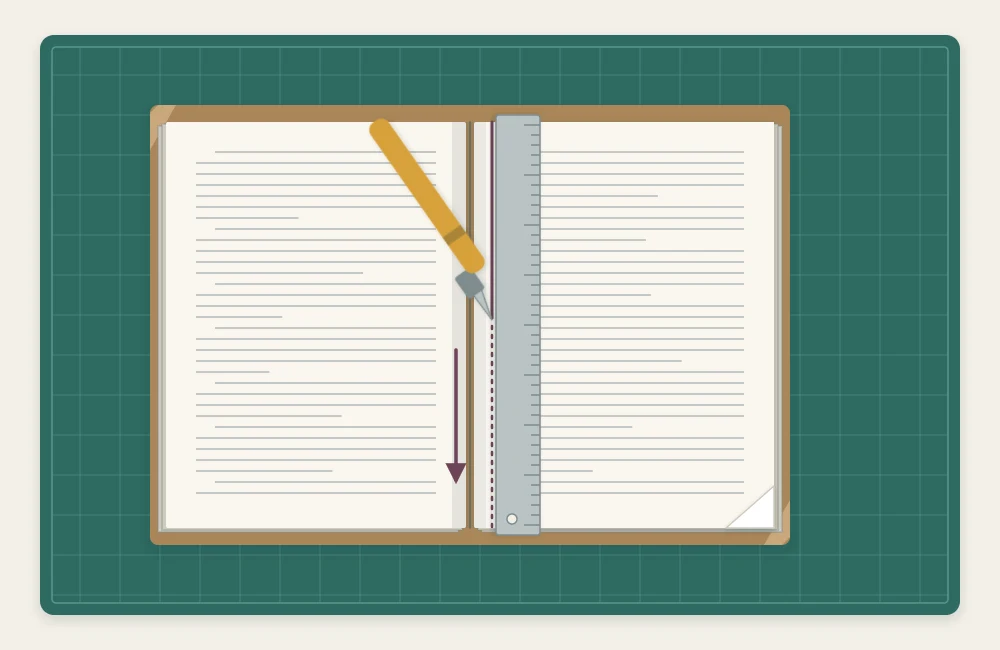
If the binding glue of an old paperback has already failed, pages may lift out with no cutting at all. Trim the crusty glued edge with the knife and ruler afterward so the page lies flat.
Five Projects That Suit Text Pages
Envelopes and Envelope Liners
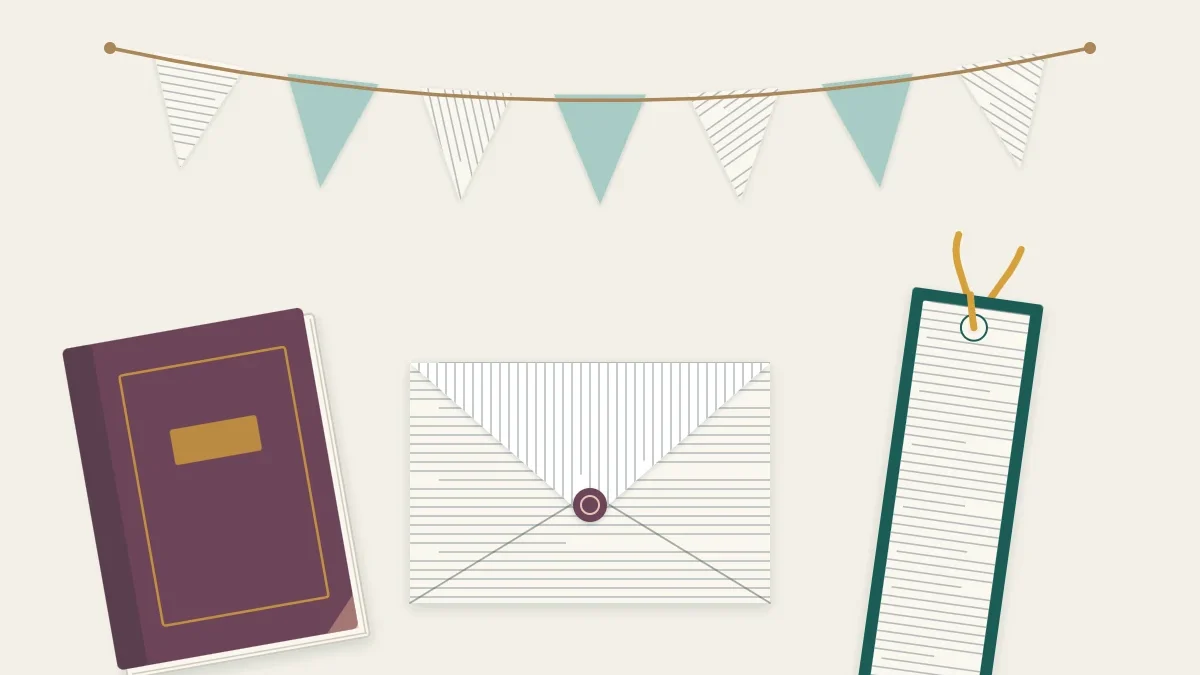
A page from a larger book, such as an atlas, a cookbook or a dictionary, is big enough to wrap a small note card. Smaller pages work as liners glued inside a plain envelope, which also solves the show-through problem. The method for sizing an envelope to a card works the same way with a book page; just add a plain label on the front if the envelope is going in the mail, so the address stays legible.
Backed Bookmarks
On its own, a text page is too flimsy for a bookmark. Glue it to 65 lb (176 gsm) cardstock, press it flat until dry, then cut strips about 2 × 6 in (5 × 15 cm). Position the cut so a chapter heading or a favorite line lands near the top. Several bookmark designs can be adapted this way, including layered strips with a punched hole for a ribbon.
A Small Garland
Punch or cut 2 in (5 cm) circles from sturdy pages and join them along a thread, or cut narrow flags and fold them over twine. Text paper garlands look best in short lengths across a shelf or a mirror, away from direct sun. The garland tutorial explains both ways of joining the shapes.
Card Backgrounds and Collage
Tear a page instead of cutting it and the edge turns soft and feathered, which makes a good background layer under a crisp cut shape in solid color. Brittle pages that failed the fold test are ideal here, since they are glued flat and never bent.
Wrapping for Small Gifts
Overlap several pages by about 1/2 in (1.3 cm) and join them with a glue stick to build a larger sheet. Wrap gently and use double-sided tape, because this paper tears at sharp box corners more easily than regular gift wrap.
Helping the Paper Last
Paper that has already yellowed will keep changing, and nothing in a home craft kit reverses that. What you can do is slow it down. Keep finished pieces out of direct sunlight and away from damp rooms, back them onto acid-free cardstock, and frame anything you care about behind glass. For general principles on keeping paper in good condition, the Library of Congress preservation guidance on paper is a reliable reference.
Treat these pieces as things to enjoy for a few seasons, not as heirlooms. A garland that mellows to a deeper cream over the years is behaving exactly as old book paper does, and that slow change is a large part of its appeal.
Frequently asked questions
Is it okay to cut up old books for crafts?
Use books you own that are damaged, unwanted or have no resale or sentimental value. Never cut library or borrowed books, and check an old book's edition and condition before cutting in case it is worth something to a reader or collector.
How do you stop old book pages from tearing or cracking?
Test a corner by folding it over and back. If it cracks, keep that paper for flat work such as collage or card backgrounds and glue it to a cardstock backing. Cut with a sharp blade and light strokes, and avoid soaking the page with liquid glue.
Can I sell crafts made from book pages?
Selling or reproducing items that show pages from a book still under copyright raises copyright questions that depend on the book and where you live. This article does not give legal advice; check the rules that apply to you before selling.
What glue works best on thin book pages?
A glue stick or a very thin, evenly brushed coat of PVA keeps thin pages flat. Heavy applications of liquid glue make the paper ripple and can show through.