Magazine Paper Crafts: Rolled Coasters From Old Pages
Fold old magazine pages into narrow strips and coil them into solid, colorful coasters. A slow, satisfying project with a sealed, usable result.

Project at a glance
Materials
- Old magazine pages, about 20–30 per coaster
- PVA glue
- Water-based clear acrylic varnish or decoupage medium
- Baking parchment
- Thin cork or felt for the base (optional)
Old magazines are an awkward kind of clutter: too colorful to throw out without a pang, too dated to read again. Magazine paper crafts put those pages to work, and the rolled coaster is the best place to start. Each page is folded into a narrow, stiff strip, and the strips are wound one after another into a solid disc. The printed images disappear, leaving fine rings of color that look more like turned wood or woven fiber than paper. It is slow, repetitive work in the pleasant sense.
Why magazine pages suit this project
Magazine paper is thin, smooth and printed edge to edge, three qualities that are drawbacks in most crafts and advantages here. Thin paper folds into many layers without becoming bulky. A smooth surface lets the coil tighten as you wind. And full-bleed printing means the folded edge of every strip carries color, which is all that shows in the finished piece.
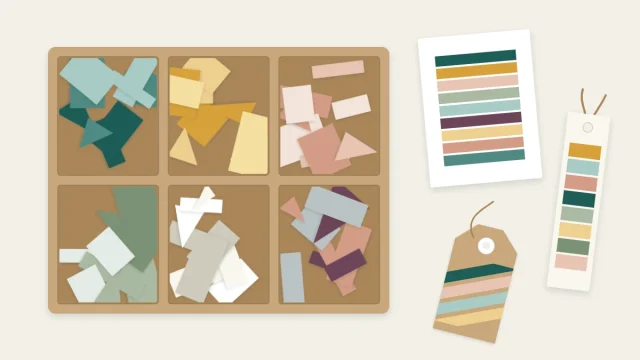
You have some control over the result. Pages dominated by one color give a strip of roughly that color, so sorting pages into warm, cool and neutral piles before folding lets you plan rings or a gradual shift from center to rim. Pages that are mostly text give a soft speckled gray. Catalogs and glossy flyers work the same way; newspaper is too soft and smudges.
How much paper to prepare
A finished coaster about 4 in (10 cm) across and 1/2 in (1.3 cm) thick uses a surprising amount of paper, because the strips are compressed so tightly. The exact number depends on the weight of the pages and how firmly you wind. Plan on somewhere between 20 and 30 magazine pages per coaster, fold a first batch of about 15 pages, and fold more once you see how quickly the disc grows.
Part one: fold the strips
- Remove the pages. Open the magazine flat and pull pages from the staples, or slice them close to the spine if it is glued. Trim off any torn margin.
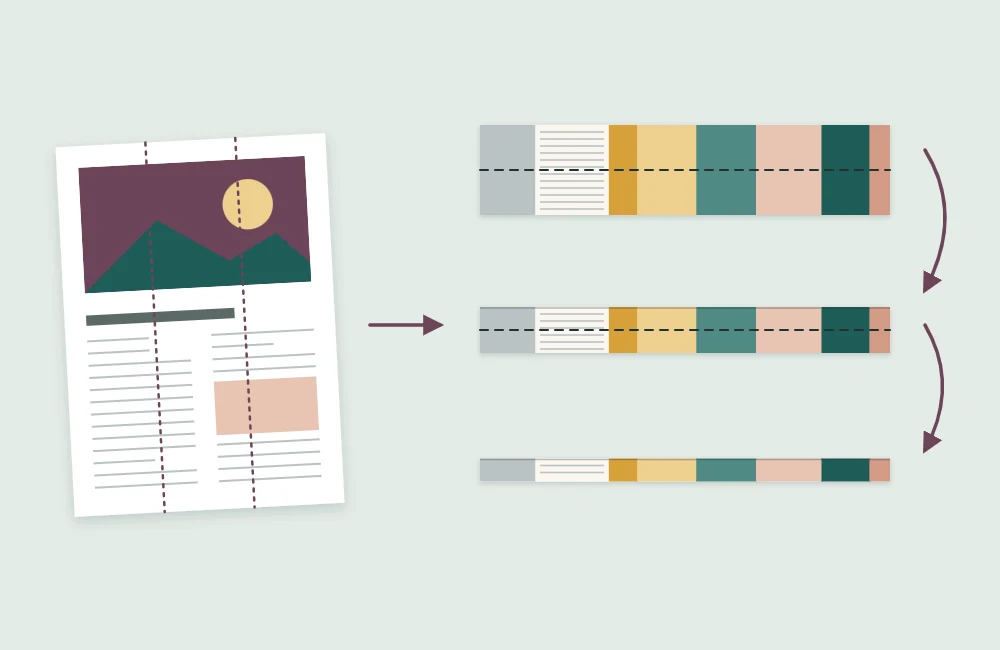
- Cut each page in half lengthwise. A typical page is about 8 in wide, so this gives two long pieces roughly 4 in (10 cm) wide and the full height of the page.
- Crease the center. Fold one piece in half lengthwise, press the fold, and open it again. The crease is a guide.
- Fold the edges to the center. Bring both long edges in to meet at the crease. The piece is now about 2 in (5 cm) wide with its raw edges hidden.
- Fold in half along the center. Close the piece on the original crease to make a strip about 1 in (2.5 cm) wide.
- Fold in half once more. One last lengthwise fold gives a strip about 1/2 in (1.3 cm) wide and eight layers thick. Run a bone folder or the back of a spoon along it so it lies flat.
- Repeat. Fold the rest of the batch, keeping every strip the same width. Consistent width is what gives the coaster a level surface.
Part two: coil the disc
- Start the center. Roll the end of the first strip tightly around a toothpick or thin skewer for three or four turns, then slide the toothpick out and pinch the roll so the hole closes.
- Glue as you wind. Run a thin line of PVA glue along the inside face of the strip, a few inches at a time, and keep rolling. Wind on a flat table with the disc lying on its side, so the edges of the strip stay level with each other.
- Join the next strip. When about 1/2 in (1.3 cm) of the strip remains, glue the start of the next one over it, or tuck it inside the open fold, and carry on. Stagger the joins so they do not line up.
- Keep the tension even. Pull each strip snug before pressing it down. Every few turns, set the disc flat and press on it with your palm to level any strip that has ridden up.
- Stop at size. Continue until the disc measures 4 in (10 cm) across, or a little more for wide mugs.
- Finish the end. Cut the last strip at a long slant so it tapers into the rim, glue it down, and hold it with a clothespin or a wrap of masking tape until it grips.
- Dry flat. Place the disc between two sheets of baking parchment under a heavy book and leave it overnight.

Tip
Use less glue than seems necessary. A thin line holds the layers; a heavy one squeezes out onto the face of the coaster, softens the paper and lets the coil slide while you wind. The article on choosing an adhesive explains why PVA is the right choice for a structural job like this.
Sealing the coaster
Unsealed, a paper coaster will mark with the first ring of condensation. Brush a water-based sealer over the top, the rim and, once that is dry, the underside. Clear acrylic varnish or a decoupage medium both work. Apply three or four thin coats and let each one dry fully before the next; thick coats stay tacky and can cloud. A circle of thin cork or felt glued to the base protects furniture and hides the back.
Watch out
A sealed paper coaster is water-resistant, not waterproof. It copes with drips and a damp glass, but should not be soaked, washed in a sink, or used under hot pans. Wipe it with a barely damp cloth.
Common problems
- The disc domes into a cone. The strips were wound in the air instead of flat on the table. While the glue is still soft, press the disc flat under weight.
- Gaps between rings. The winding was loose or a join was bulky. Work a little glue into the gap with a toothpick and clamp the disc with a rubber band around the rim.
- An uneven surface. The strips vary in width. Sort them and use similar widths together.
More to make with rolled pages
The same coiled disc scales up without any change of method. At 7 to 8 in (18 to 20 cm) across it becomes a trivet for warm, not hot, dishes; larger still, a placemat. Easing each ring slightly higher than the last as you wind turns the flat disc into a shallow bowl. Small tight coils left unsealed can be combined into wall pieces, and anyone who enjoys the rolling itself will find a finer, more decorative version of it in beginner paper quilling.
The offcuts have uses as well. Leftover page halves with good color are worth saving for cut and torn collage, and the gentler, text-heavy look of old novels is covered separately in projects for damaged books.
Frequently asked questions
How many magazine pages does one coaster need?
It varies with the weight of the paper and how tightly the strips are wound. As a rough guide, allow 20 to 30 pages for a coaster about 4 in (10 cm) across. Fold a first batch, start coiling, and prepare more as needed.
Are magazine coasters waterproof?
No. Several thin coats of water-based varnish or decoupage medium make them water-resistant enough for drips and a damp glass, but they should not be soaked, washed in a sink or used under hot pans.
Can I use newspaper instead of magazine pages?
Newspaper is softer, tears more easily when folded into narrow strips and its ink smudges, so the result is duller and less firm. Magazines, catalogs and glossy flyers give a tighter, more colorful coil.